Precision Manufacturing for Robotics & Automation
The development of robotics and automation equipment requires high-precision components that maintain strict tolerances under operational stress. PartsMake acts as an engineering-focused manufacturing partner, supporting OEMs and robotics startups from rapid prototyping of end-effectors to high-volume production of structural housings and drive components.
We translate complex CAD designs into functional, assembly-ready parts while aligning material selection and manufacturing methods with the performance requirements of your robotic application.
5-axis
Complex multi-sided machining
±0.005 mm
Typical precision range
1–50,000+
Parts across production stages
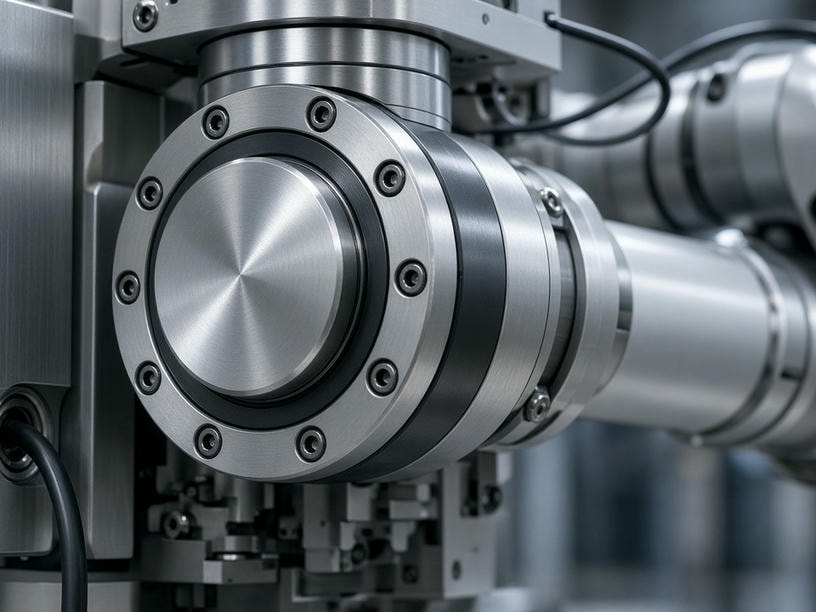
Built for motion
Joint parts, end-effectors, frames, shafts, and precision housings engineered for dependable assembly.
Manufacturing suite
Capabilities matched to robotic geometry
From rotating assemblies to structural automation cells, we select the right process for geometry, material, tolerance, and production volume.
Discuss your part requirements01 / CNC Machining & 5-Axis Milling
Complex parts in fewer setups
Robotic joints, gearboxes, and precision housings can be machined with high positional accuracy and tight geometric tolerances for smooth mechanical movement.
02 / Precision Turning
Concentric shafts and pins
CNC turning and mill-turn centers produce shafts, pins, and custom fasteners with the surface quality needed to reduce friction and wear.
Part families
Components that keep automation moving
Support for the precision parts most commonly found in robotic arms, collaborative robots, and automated equipment.
Joints & drive components
Bearing-ready housings, gearboxes, and precision interfaces for controlled motion.
End-effectors & fixtures
Lightweight tooling, grippers, mounting plates, and custom fixtures for repeatable handling.
Frames & enclosures
Structural frames, covers, and automation-cell components with accurate mounting patterns.
Shafts & precision housings
Turned shafts, pins, custom fasteners, and housings designed for long-term assembly performance.
Technical parameters
A production path for every part stage
Typical ranges help your engineering team select the right process. Final capability depends on part geometry, material, and drawing requirements.
| Process | Typical materials | Tolerance range | Typical size / finish | Typical volume |
|---|---|---|---|---|
| 5-Axis Milling | Al 6061/7075, stainless steel, titanium | ±0.005 mm – ±0.01 mm | Application-dependent; anodizing or other specified finish | 1 – 500+ |
| CNC Turning | Steel, brass, Delrin, PEEK | ±0.005 mm – ±0.01 mm | Application-dependent; controlled surface finish | 10 – 5,000+ |
| Sheet Metal | Aluminum, mild steel, stainless steel | ±0.1 mm – ±0.5 mm | Application-dependent; powder coating or anodizing | 5 – 1,000+ |
| Injection Molding | ABS, PC, Nylon PA6/PA66, POM | ±0.05 mm – ±0.1 mm | Tool-dependent; specified molded surface finish | 500 – 50,000+ |
| 3D Printing | Nylon PA12, resin, AlSi10Mg | ±0.1 mm – ±0.3 mm | Build-size dependent; process-specific finish | 1 – 100 |
Engineering for performance
Designed around the demands of motion
Our engineering team reviews every project file before production begins so parts are optimized for manufacturability, assembly, and end-use performance.
Lightweighting
Select high-strength, low-weight materials such as 7075 aluminum or titanium and optimize wall thickness to reduce inertia without sacrificing rigidity.
Repeatability
Inspection focuses on bearing fits, hole-to-hole alignment, surface flatness, and other critical-to-function dimensions.
Fast iteration
Move consistently from 3D-printed prototypes to pilot-run CNC parts as your design evolves.
Lifecycle support
One manufacturing partner from prototype to production
A single-source workflow helps preserve design intent while your robotics program moves through validation and scale-up.
-
01 / Prototype phase
Rapid 3D printing and quick-turn CNC machining validate form and fit.
-
02 / Engineering samples
Low-volume production uses production-grade materials to verify function and assembly.
-
03 / Pilot production
Optimized tooling and processes bridge the gap to full-scale manufacturing.
-
04 / Repeat production
Consistent, quality-controlled batches support long-term supply chain needs.
Start your project
Get a manufacturing review for your robotics project
Share your design intent and project context. Our team can review the manufacturing route, material requirements, and production stage.