Precision Chrome Plating Services for Industrial and Aesthetic Components
PartsMake provides professional metal finishing for CNC machined parts, combining hard chrome and decorative chrome capabilities with engineering-led process control.
From dimensional planning and surface preparation to plating and final inspection, we help your components meet tolerance, corrosion resistance, hardness, and appearance requirements.
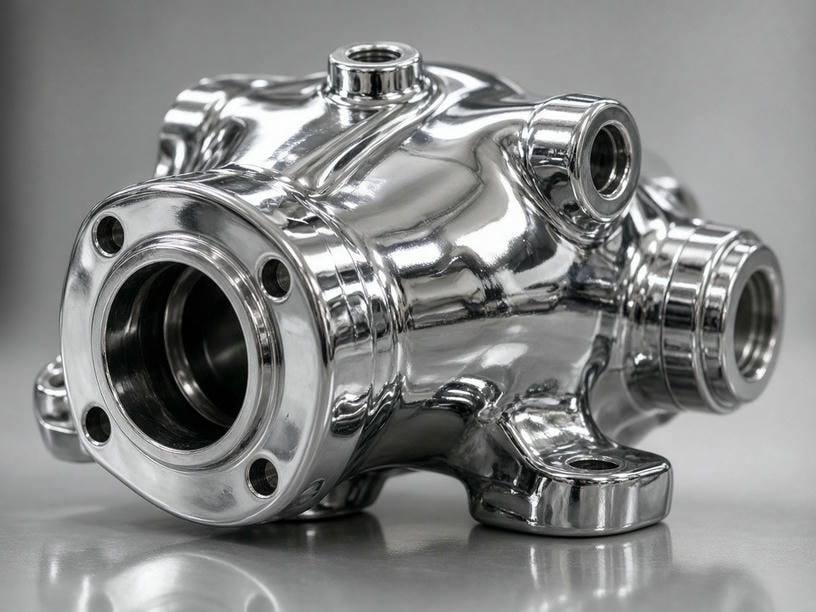
25–500 µm
Typical hard chrome thickness
65–72 HRC
Hard chrome surface hardness
Two distinct purposes
Chrome plating selected for the job
Chrome plating is an electrolytic process that deposits chromium onto a metal substrate. The correct process depends on whether the priority is functional performance, visual finish, or both.
Hard Chrome
An industrial coating applied for wear resistance, low friction, corrosion protection, and long service life in demanding environments.
Hydraulic rams · shafts · molds
Decorative Chrome
A thin, reflective finish selected for appearance, tarnish resistance, and a consistent surface on customer-facing components.
Automotive trim · appliances · hardware
Technical comparison
Choose the coating by performance requirement
The two processes should not be treated as interchangeable. Our engineering review aligns coating thickness, hardness, friction, and finish with the part’s actual operating environment.
| Feature | Hard Chrome | Decorative Chrome |
|---|---|---|
| Primary goal | Wear resistance and durability | Aesthetics and corrosion resistance |
| Typical thickness | 25 µm–500 µm | 0.1 µm–2 µm |
| Hardness | 65–72 HRC | Moderate; thin functional layer |
| Friction coefficient | Low | Moderate |
| Typical applications | Hydraulic rams, shafts, molds | Automotive trim, appliances, visible hardware |
Manufacturing integration
From CAD review to plated component
Plating affects final dimensions, so it must be considered before machining begins. We adjust pre-plating offsets and tolerances to help the finished component fit its assembly requirements.
Discuss your drawing requirements →-
1
Engineering review
Analyze material compatibility, coating thickness, masking, and functional requirements.
-
2
Precision machining
CNC turning or milling is completed with the required pre-plating dimensional offsets.
-
3
Surface preparation
Cleaning, polishing, and masking prepare the substrate for adhesion and consistent coverage.
-
4
Controlled plating
Chrome is deposited to the specified layer thickness for the selected process.
-
5
Final inspection
Dimensions, thickness, adhesion, surface integrity, and cosmetic quality are verified.
Application-specific routes
Finishing engineered around the component
Route 01
Piston rods and hydraulic cylinders
Hard chrome provides a robust surface for high-pressure environments and repetitive motion. Process control focuses on adhesion and resistance to peeling under stress.
Route 02
Precision shafts and bushings
Uniform, high-hardness coatings help minimize wear in rotating or sliding applications, with consistent thickness across bearing surfaces.
Route 03
Decorative components
Multi-stage polishing and plating are managed to deliver a uniform, high-luster finish with close attention to visible defects and consistency.
Quality assurance
Inspection that protects the finished part
Surface finishing is only effective when the coating is verified against the part’s requirements. Our inspection protocols address both functional performance and visible appearance.
Dimensional verification
Confirm parts remain within tolerance after plating.
Thickness measurement
Use magnetic or eddy-current testing to verify coating depth.
Adhesion testing
Check the bond between substrate and chrome for delamination risk.
Visual inspection
Review pitting, uneven luster, and surface defects on visible parts.
Why partner with PartsMake
One engineering team from machining through finishing
Consolidating CNC machining and surface finishing under one project management team reduces lead-time bottlenecks, minimizes logistics risks, and helps deliver parts ready for your assembly line.
Our engineering-first approach flags hydrogen embrittlement risks, substrate compatibility concerns, and tolerance challenges before production begins—saving time and cost.
Technical questions
Chrome plating guidance for your project
Request a quote
Plan your chrome plated component with our engineering team
Share your drawings, material specifications, volume requirements, and applicable standards for a manufacturing review and quotation.
Email:
Facility Address:
Tell us about your hard chrome or decorative chrome requirements.