Stainless steel finishing for precision parts
Passivation for Stainless Steel Precision Parts
Controlled passivation for CNC machined, turned, sheet metal, and precision stainless steel components. We help engineering and procurement teams receive clean, inspected parts ready for assembly.
304 / 316
Common stainless grades
ASTM A967
Common passivation standard
Minimal
Typical dimensional impact
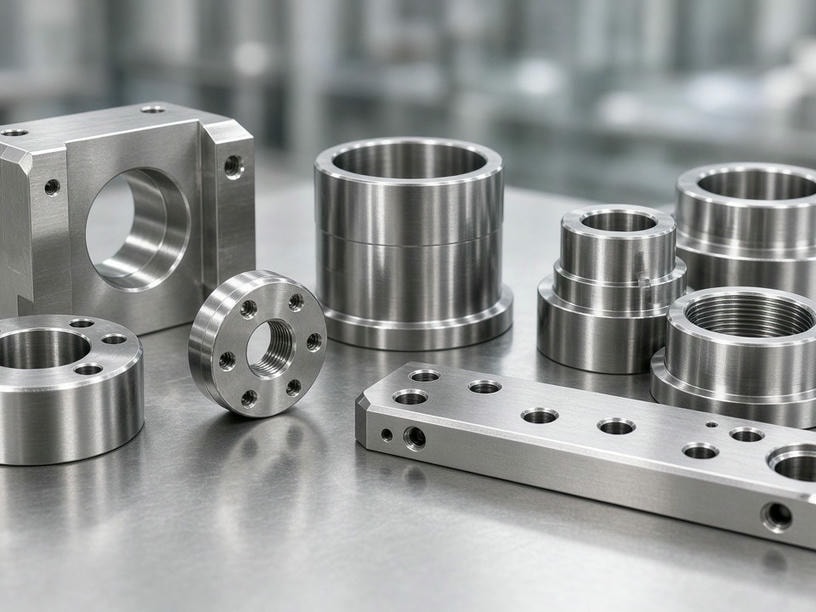
Controlled finishing route
Machining, cleaning, passivation, rinsing, drying, inspection, and packaging managed as one project.
The essential distinction
Passivation cleans the surface. It does not add a thick coating.
Passivation is a chemical treatment that removes free iron and other surface contaminants from stainless steel. This allows the chromium in the alloy to form a more stable passive oxide layer naturally.
It is not plating, painting, anodizing, or powder coating. During machining, turning, grinding, handling, and fabrication, stainless surfaces can pick up contamination from tools, fixtures, abrasives, work tables, oil, or chips. If it remains, rust spots, discoloration, and early corrosion may occur even on stainless steel.
What it supports
A cleaner surface and improved resistance to staining and corrosion caused by free iron contamination.
What it does not replace
Correct material selection, effective cleaning, removal of heavy scale, or a coating designed for wear, color, insulation, or severe chemical protection.
Process control
A complete route from machining to a ready-to-assemble part
Passivation performs best when the upstream manufacturing process is controlled. Our route accounts for machining residue, burrs, surface condition, cleaning, treatment, and inspection.
Degrease and clean
Remove machining oil, coolant film, chips, residue, and handling contamination. Blind holes, grooves, threads, and internal corners receive particular attention.
Treat with specified media
Apply nitric acid-based or citric acid-based passivation according to the material, customer standard, safety requirements, and application.
Rinse and dry
Thorough rinsing and controlled drying help prevent water marks, residual chemicals, and new surface contamination.
Inspect the part
Review dimensions, threads, bores, surface condition, burrs, cleanliness, discoloration, and rust or stain indications against the drawing.
Verify when required
Visual inspection, water break, copper sulfate, high humidity, salt spray, or customer-defined testing can be arranged when specified.
Package for delivery
Packaging requirements are reviewed for cleanliness, handling protection, and storage before final assembly.
Material guidance
Common stainless grades for passivation
Suitability depends on alloy composition, machining condition, heat treatment, surface contamination, and the customer specification.
| Grade | Suitability | Typical applications | Engineering note |
|---|---|---|---|
| 304 / 304L | Very common | Precision parts, brackets, housings, laboratory equipment | Good general corrosion resistance; requires proper cleaning after machining. |
| 316 / 316L | Very common | Medical, laboratory, fluid handling, chemical exposure | Better corrosion resistance than 304 due to molybdenum content. |
| 303 | Review required | Turned parts, shafts, fittings, fasteners | Higher sulfur improves machinability but may reduce corrosion performance. |
| 17-4 PH | Common with correct process | Aerospace, automation, high-strength components | Heat treatment condition should be confirmed. |
| 420 / 440C | Application-dependent | Wear parts, blades, hardened components | Martensitic grades need careful review and offer lower corrosion resistance than 300 series. |
| 430 / Duplex | Project-specific | General-purpose, industrial, and chemical equipment components | Process standard and treatment media should be confirmed for the application. |
Why cleaning matters
304 and 316 parts need a clean surface before treatment
304 and 316 are widely selected for corrosion resistance, availability, and manufacturability. Machining can temporarily reduce surface cleanliness, however. Passivation should not be used to hide poor cleaning.
If oil, compound, chips, or heavy contamination remain, the treatment may not contact the stainless surface evenly. This is especially important for medical, laboratory, fluid handling, and clean equipment applications.
Common post-machining risks
- •Cutting oil and coolant film
- •Fine chips in holes or threads
- •Embedded iron from tools or fixtures
- •Abrasive contamination
- •Handling marks and rust-colored stains
- •Residue in blind holes and grooves
Areas requiring extra review
Blind holes, internal threads, small cross holes, precision bores, thin walls, tight assemblies, cosmetic surfaces, sealing areas, and medical or laboratory components.
Technical parameters
Standards, media, dimensions, and corrosion role
The exact route should follow the drawing, purchase order, or customer specification. If no standard is listed, our engineering team can review the application before quotation.
| Parameter | Typical options | Engineering notes |
|---|---|---|
| Applicable steel grades | 304, 304L, 316, 316L, 303, 17-4 PH, selected 400 series | 300 series grades are most common; free-machining and hardened grades need closer review. |
| Common standards | ASTM A967, ASTM A380, AMS 2700, customer specifications | State the standard, type, class, test method, and acceptance criteria when required. |
| Treatment media | Nitric acid-based or citric acid-based | Selection depends on material, specification, safety, performance, and customer requirements. |
| Dimensional impact | Generally minimal | Review critical bores, threads, sealing faces, ground surfaces, and tight tolerances before finishing. |
| Corrosion-resistance role | Supports a clean chromium oxide passive surface | Helps resist contamination-related staining and corrosion; it does not replace correct grade selection. |
| Pre- and post-treatment | Cleaning, rinsing, drying, inspection, packaging | Heavy scale, weld discoloration, or embedded contamination may require additional treatment. |
Example drawing notes
“Passivate per ASTM A967” · “Passivate stainless steel parts per AMS 2700” · “Passivation required after machining; no visible rust or free iron contamination” · “Clean and passivate 316L components after final machining.”
Manufacturing capability
Passivation coordinated with the complete manufacturing route
PartsMake supports stainless steel components manufactured through internal and coordinated production processes. Managing machining and finishing together helps reduce communication gaps between production, cleaning, passivation, and inspection.
Discuss Your PartInspection and application
Built for parts where cleanliness and surface stability matter
Inspection scope
- Critical dimensions and GD&T requirements
- Thread gauges, hole locations, and diameters
- Flatness, perpendicularity, and concentricity
- Surface roughness and visual condition
- Burr, rust, stain, discoloration, and cleanliness checks
Typical applications
- Medical and laboratory equipment
- Semiconductor equipment hardware
- Robotics and automation components
- Electronics and AI hardware
- Aerospace, drones, pumps, valves, and fluid systems
Request an RFQ review
Send your stainless steel parts for passivation review
Share your drawings, CAD files, material grade, quantity, and passivation requirements. PartsMake will review manufacturability, machining method, cleaning needs, finishing requirements, inspection scope, and delivery expectations.
Information to include
- 2D drawing and 3D CAD file
- Material grade and quantity
- Passivation standard
- Critical tolerances and surface roughness
- Inspection and testing requirements
- Packaging and delivery schedule
Address:
Start your quote
Provide your project details through our inquiry channel and our team will follow up with the appropriate technical questions.
If the drawing only says “passivate,” we may confirm the standard, test requirement, and process route before quoting.