Precision Nickel Plating Services for Custom Industrial Parts
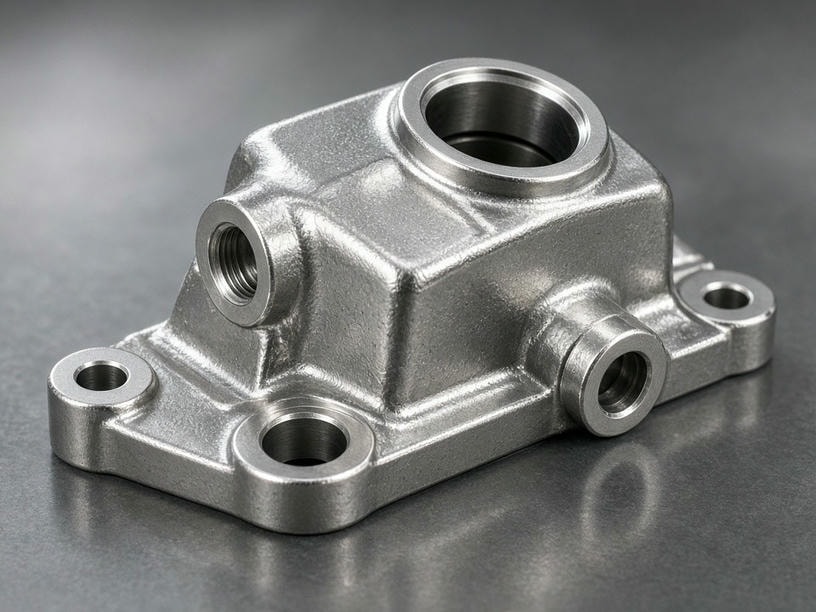
Nickel plating protects components against wear and environmental degradation while delivering a consistent, controlled finish. PartsMake integrates plating requirements into the complete manufacturing lifecycle.
5–50 μm
Typical coating thickness
150–500 HV
Typical hardness range
±0.005 mm
Dimension control target
Integrated workflow
Machining, finishing, and inspection managed together.
Application-led
Specifications aligned to your environment and assembly.
Application fit
One coating, three functional roles
Engineers specify nickel plating for a defined performance outcome. Our process can be configured for protection, appearance, or as a dependable foundation for another finish.
Corrosion Resistance
A sacrificial or barrier coating for components exposed to moisture, chemicals, and harsh environments across automotive, aerospace, and industrial equipment.
Decorative Finish
A smooth, bright, reflective surface for consumer electronics, medical devices, and high-end industrial hardware requiring visual consistency.
Underplate
A reliable base layer beneath gold, silver, or chrome that improves adhesion, levels the surface, and limits base-metal diffusion.
Built into production
Manufacturing and finishing capabilities
PartsMake does not treat plating as an afterthought or simply pass it to an unrelated third party. We integrate the finish into the manufacturing workflow to reduce dimensional non-conformance and coating failures.
Precision dimension control
Plating adds material thickness. We adjust CNC machining parameters for the specified coating so the finished part meets final print dimensions and assembly tolerances after plating.
High-stress and corrosive environments
Copper-Nickel systems
The copper layer fills micro-imperfections in the substrate and provides superior leveling. The nickel layer then delivers the protective finish and enhanced corrosion performance.
Technical data
Performance parameters for nickel plating
These typical ranges are tailored to your drawing requirements, substrate, tolerance stack, and application environment.
| Property | Typical range / characteristics |
|---|---|
| Coating Thickness | 5 μm to 50 μm, customizable based on tolerance |
| Hardness | 150–500 HV, depending on bath chemistry |
| Gloss Level | Bright, high reflectivity, to matte, low glare |
| Substrate Materials | Steel, copper, brass, zinc, and stainless steel |
| Corrosion Resistance | Excellent; salt spray tested per ASTM B117 |
| Dimension Control | ±0.005 mm tolerance management for plated parts |
DFM review
Engineering before production
Plating failures often begin with poor preparation or unsuitable geometry. Our engineering team reviews CAD files and drawings before production to identify risks and define the right process.
Deep recesses
We check blind holes and internal surfaces to ensure plating solution access.
Sharp edges
We identify areas prone to excessive build-up and recommend radii for uniform thickness.
Masking needs
We define surfaces that must remain unplated for electrical conductivity or assembly fit.
Single-source execution
Streamline your supply chain with one accountable partner
Coordinating between a machine shop and a plating facility can create communication gaps, shipping delays, and quality disputes. PartsMake manages raw material sourcing, CNC machining, finishing, and final inspection in one workflow.
Ready-to-install components
We verify plating thickness, adhesion, appearance, and final dimensional conformance before shipment.
Discuss Your RequirementsStart a project
Request a quote for your nickel plating project
Send your CAD files, technical drawings, plating specifications, annual volume, and required surface finish standards. If you are unsure about thickness or plating type, our engineering team can recommend an approach based on your application and budget.
Tell us about your requirements
Include part geometry, substrate, finish expectations, tolerance requirements, and estimated annual volume.