Custom TPU Injection Molding Services
PartsMake provides end-to-end plastic injection molding services for flexible parts, from initial DFM analysis through mass production. Our TPU capabilities combine soft-touch performance with strict dimensional and cosmetic control.
From prototype development and bridge production to high-volume manufacturing, we align tooling, materials, and process controls with your application requirements.
60A–80D
Typical Shore hardness range
50–800T
Injection machine capacity
±0.03 mm
Precision molding capability
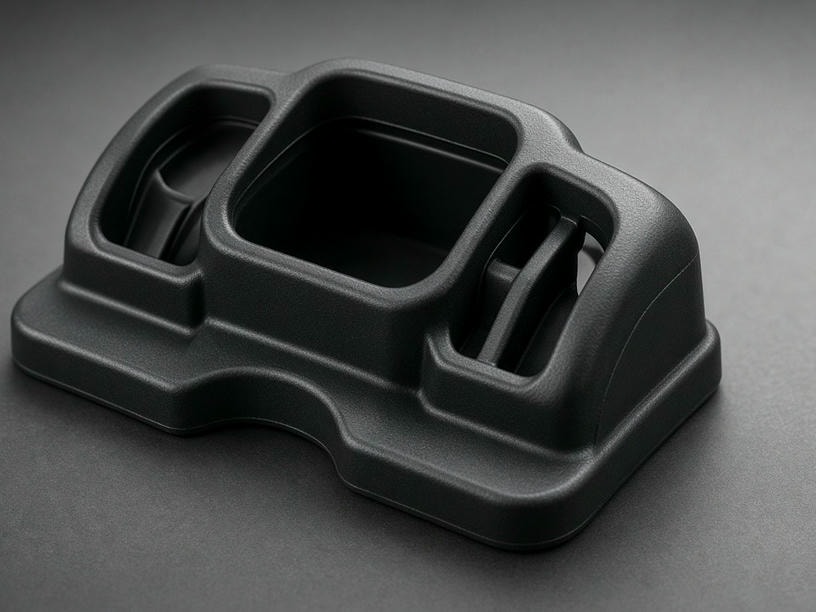
Engineering focus
Shore hardness, rebound, abrasion resistance, bonding, and soft-part defect control.
Material expertise
Understanding TPU processing requirements
Thermoplastic polyurethane is selected for its elasticity, abrasion resistance, and variable hardness from Shore A to Shore D. Its flexible behavior also introduces manufacturing considerations that differ from rigid materials such as ABS or PC.
Moisture control
TPU is highly hygroscopic. Proper drying helps prevent material degradation, cosmetic defects, and inconsistent mechanical performance.
Flash reduction
We tune clamping force and injection speed to control flash at the parting line, reducing secondary trimming and per-unit cost.
Performance designed around your application
Material selection can be optimized for rebound, elongation, abrasion resistance, chemical resistance, and the tactile feel required by your product.
Production platform
PartsMake technical capabilities
We match tooling architecture and machine capacity to your part size, production volume, and quality requirements, from single-cavity prototype molds to multi-cavity production tools.
| Specification | PartsMake capability |
|---|---|
| Mold types | Prototype, bridge, and production molds |
| Mold cavities | Single-cavity and multi-cavity |
| Mold base | LKM, DME, and equivalent systems |
| Mold steel | P20, 718H, NAK80, S136, and H13 |
| Maximum mold size | Up to 1000 × 800 mm |
| Injection machine | 50–800 ton |
| Maximum part size | 800 × 600 × 300 mm |
| Part weight | < 1 g to 5 kg |
| Molding tolerance | ±0.05–0.20 mm; precision down to ±0.03 mm |
| Wall thickness | 0.5 mm minimum; 1.0–3.0 mm recommended |
| Draft angle | 0.5°–2° |
| Mold life | 10,000 to 1,000,000+ cycles |
Material and process window
TPU material parameters
We adjust processing variables according to the specific TPU grade, including polyether or polyester chemistry, part geometry, and the required balance of hardness, rebound, wear resistance, and elongation.
Final settings are validated against the material supplier's recommendations and the performance targets of your component.
| Property or parameter | Typical range |
|---|---|
| Shore hardness | 60A–80D |
| Elongation at break | 300%–800% |
| Melting temperature | 180°C–230°C |
| Mold temperature | 20°C–60°C |
| Shrinkage rate | 0.5%–2.0% |
| Minimum wall thickness | 0.8 mm |
Application solutions
Flexible parts, overmolding, and bonding
TPU can deliver a resilient, soft-touch interface while maintaining functional durability. Our engineers develop the substrate, interface, and process together to reduce delamination risk.
TPU overmolding
Combine a flexible TPU surface with a rigid substrate for grips, seals, protective covers, housings, and ergonomic interfaces.
Transparent TPU
We review gate location, flow balance, venting, and cosmetic requirements for transparent or appearance-critical TPU parts.
Soft-gel defect control
Process controls address flash, bubbles, burn marks, flow lines, short shots, sticking, deformation, and inconsistent surface texture.
Chemical bonding
Compatible material combinations, such as TPU with PC or ABS, can create a molecular bond.
Mechanical interlocking
Undercuts and textured substrate interfaces provide a mechanical lock for incompatible pairings.
Insert molding
Brass or stainless steel threaded inserts can be integrated into flexible TPU housings.
DFM and quality controls
Prevent defects before tooling begins
Our DFM review evaluates how TPU will flow, bond, vent, cool, and release from the mold. The goal is stable production with fewer cosmetic corrections and less secondary finishing.
Discuss your part with an engineerFlow path optimization +
We review flow paths and air evacuation to reduce trapped air, burn marks, and short shots.
Gate and vent placement +
Gate locations are selected to balance pressure and protect visible surfaces, while vents support clean filling and consistent appearance.
Ejection and surface finish +
Because TPU can stick and deform, we optimize draft angles and SPI surface finishes for smooth release.
Dimensional and cosmetic review +
The DFM process connects material behavior, wall thickness, shrinkage, tolerances, and cosmetic expectations before production tooling.
Submit your project for review
Ready to specify your TPU part?
Send your CAD files in STEP, IGS, or X_T format, along with material specifications, desired Shore hardness, and expected annual volume. Our engineering team will review your data and provide a detailed DFM report and quotation.
Include any requirements for TPU grade, color matching, transparent TPU, soft-touch performance, or overmolding compatibility.
Address
Talk to our project management team
Share your requirements and receive a rapid response for your technical RFQ.