Industrial zinc plating for steel components
Zinc Plating Services for Industrial Steel Components
Protect steel components from oxidation with controlled electro-galvanizing, RoHS-compliant trivalent chromium passivation, and engineering support for demanding assemblies.
Cr3+
Trivalent chromium systems
5–15 µm
Typical coating thickness
ASTM B117
Salt spray reference standard
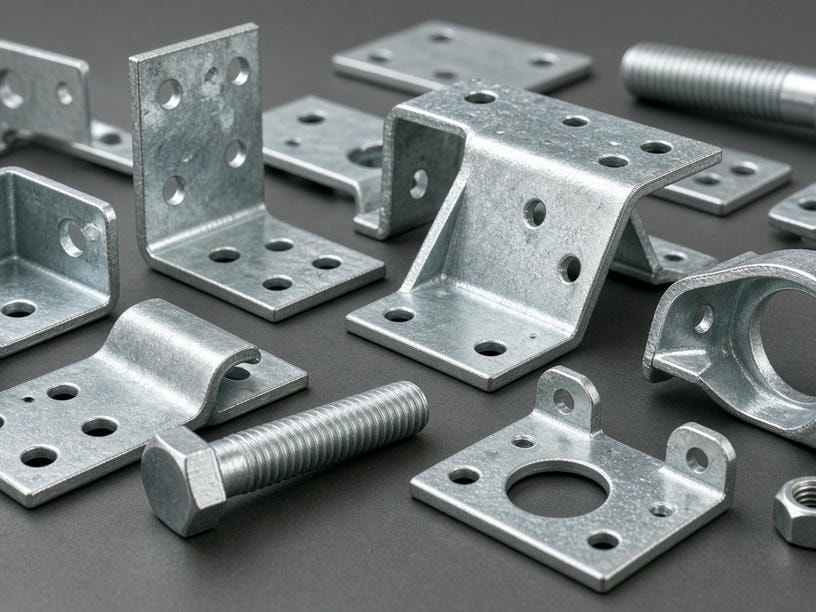
Engineering review
Material grade, hardness, masking, threads, and post-plating dimensions reviewed before production.
Finish selection
Choose the zinc system that fits your application
Zinc plating creates a sacrificial barrier that protects steel from corrosion. We use trivalent chromium passivation in place of older hexavalent chromium processes, supporting environmental compliance while delivering practical corrosion protection.
Why trivalent chromium?
Cr3+ passivation helps meet RoHS-oriented requirements and provides a controlled finish for industrial, automotive, robotics, and equipment components.
White zinc
ClearBright silver-blue appearance with the lowest corrosion resistance of the three options. Well suited to interior parts, aesthetics, and electrical conductivity.
Yellow zinc
High protectionAn iridescent yellow finish with stronger corrosion resistance than clear zinc, commonly selected for outdoor and automotive applications.
Black zinc
Low reflectionA black dye added to the trivalent chromate provides a matte or gloss black appearance for optics, electronics, assembly differentiation, and reduced light reflection.
Technical parameters
Performance characteristics at a glance
Typical values vary with base material, geometry, bath condition, and part handling. Confirm the required finish and corrosion target during RFQ review.
| Finish type | Typical salt spray | Appearance | Base material | Size impact | Typical use |
|---|---|---|---|---|---|
| White / Clear | 24–72 hrs | Bright silver | Steel components | 5–12 µm | Interior, conductivity |
| Yellow | 72–120+ hrs | Iridescent yellow | Steel components | 5–15 µm | Outdoor, automotive |
| Black | 72–96 hrs | Matte or gloss black | Steel components | 5–12 µm | Electronics, optics |
Salt spray hours reference ASTM B117 testing. Actual results may vary based on base material, part geometry, coating system, and test conditions.
Critical risk control
Hydrogen embrittlement management
Electrolytic plating can introduce hydrogen into the metal lattice. High-strength steel, typically grade 10.9 or higher, may then be vulnerable to sudden brittle failure under load.
Identify material and hardness
Provide the steel grade and hardness with your RFQ so the engineering team can assess susceptibility.
Apply post-plating baking
A mandatory de-embrittlement baking cycle follows plating to drive out hydrogen before service.
Document the process
Time and temperature requirements are controlled according to applicable industry standards.
Design for plating
Protect fit, function, and assembly performance
A request for “zinc plating” should also define how coating buildup affects precision features. Our engineering review addresses the details that can determine whether a plated part assembles correctly.
Tolerance allowance
We account for typical 5–15 micron coating thickness when reviewing machining dimensions and final assembly requirements.
Masking
Specific areas can remain unplated for electrical grounding, precision bores, or other functional surfaces.
Threads and interfaces
Thread buildup is considered so nuts, fasteners, and mating components continue to operate freely after finishing.
Manufacturing lifecycle
One coordinated path from prototype to production
We integrate manufacturing, inspection, and finishing so you do not have to coordinate multiple vendors for plated steel components.
01
Review
Assess CAD files, drawings, material specifications, hardness, corrosion targets, masking, and dimensional risks.
02
Produce and finish
Coordinate controlled manufacturing and zinc plating through in-house capabilities or a vetted supply chain.
03
Inspect and deliver
Verify critical dimensions after plating so prototype and repeat-production parts arrive ready for assembly.
Common questions
Clear answers before production
Share your technical requirements early. Our team can help identify coating, tolerance, and material risks before parts enter production.
Submit your RFQ
Get a zinc plating plan built around your parts
Send your CAD files, drawings, material details, and target corrosion performance. Our project management team will review hydrogen embrittlement, coating buildup, masking, and assembly risks before production begins.
Email:
Address:
Submission: Attach PDF, STEP, or IGES technical files for faster manufacturing review.
Talk with our project management team
Provide your requirements and we will help define the right zinc finish and process controls.