Custom Polypropylene (PP) Injection Molding Services
From DFM analysis and mold design to mass production and assembly, PartsMake helps you develop reliable PP components around the material’s low density, high shrinkage, chemical resistance, and flow behavior.
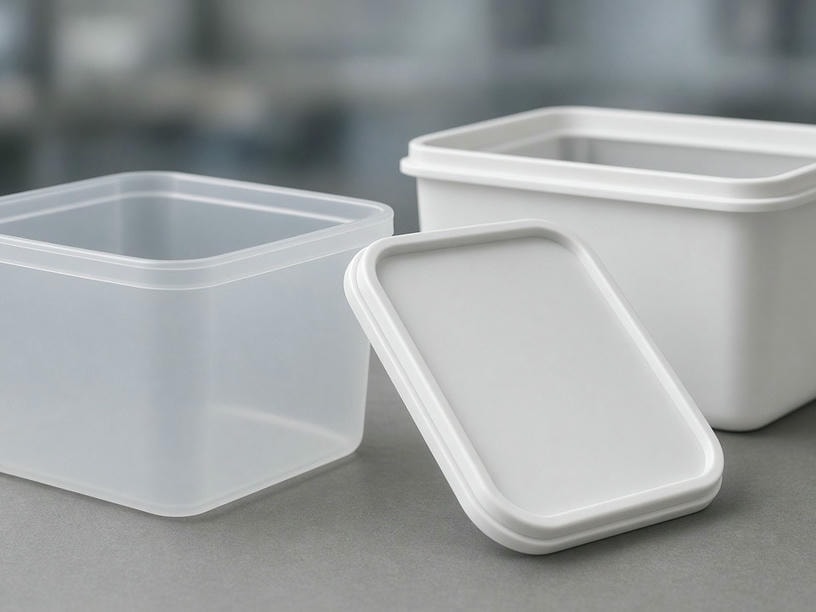
PP engineering expertise
Designed around PP’s real processing behavior
Polypropylene is widely used for cost-effective, lightweight components that need chemical resistance and repeated flexing. Its significant shrinkage and distinct flow characteristics make mold design, gate placement, cooling, and process control essential.
Our engineers support prototypes, bridge production, and high-volume consumer components, optimizing the design for standard PP and glass-filled PP before tooling begins.
Machine range in tons
Precision tolerance, mm
Potential mold cycles
Design guidance
Key considerations for PP parts
The right design decisions help control cosmetic defects, dimensional variation, and fatigue performance throughout the product lifecycle.
Shrinkage control
PP typically shrinks 1.0%–2.5%. Detailed mold flow analysis helps calculate compensation during tooling and reduce sink marks, dimensional drift, and uneven contraction.
Living hinge direction
PP is preferred for living hinges because of its excellent fatigue resistance. Gate locations are optimized so polymer chains align perpendicular to the hinge axis for longer cycle life.
Wall thickness
A nominal wall thickness of 1.0–3.0 mm generally balances structural integrity, flow, and cooling efficiency. Consistent walls also help limit differential shrinkage.
Glass-filled PP and warpage
Glass fibers improve stiffness and heat deflection while typically lowering shrinkage. They can also create anisotropic warpage, so cooling and gating must be adjusted to manage fiber orientation.
Process window
Typical PP processing parameters
These values provide a starting point for standard PP molding. Final settings are confirmed through material data, mold flow, tooling design, and T1 sampling.
| Parameter | Typical value |
|---|---|
| Melting temperature | 200°C–280°C |
| Mold temperature | 20°C–80°C |
| Shrinkage rate | 1.0%–2.5% |
| Recommended wall thickness | 1.0–3.0 mm |
| Draft angle | 0.5°–2.0° |
| Material density | 0.90–0.91 g/cm³ |
Production capacity
Technical capabilities that scale
From prototype molds to high-cavitation production tooling, our equipment and tooling options support a broad range of part sizes, weights, and volumes.
Mold types
Prototype, bridge, and production molds
Mold steel
P20, 718H, NAK80, S136, and H13
Part range
Up to approximately 800 × 600 × 300 mm; under 1 g to approximately 5 kg
Tolerance and life
Typical ±0.05–0.20 mm; precision to ±0.03 mm; 10,000 to 1,000,000+ cycles
End-to-end delivery
A controlled path from CAD to finished parts
DFM analysis
Review wall thickness, draft, ribs, undercuts, flow, and shrinkage risks before tooling.
Mold manufacturing
CNC, EDM, and grinding processes produce tooling using LKM, DME, or equivalent systems.
T1 sampling
Verify dimensions, cosmetic finish, and material flow with samples for approval.
Production molding
Support low- to high-volume runs, including insert molding and overmolding.
Finishing and assembly
Add painting, printing, laser marking, and assembly for ready-to-use parts.
Material portfolio
PP expertise backed by broader material access
When PP is not the ideal choice, our engineering team can help evaluate alternative thermoplastics, elastomers, and high-performance polymers for the same application.
Standard and engineering polymers
ABS, PC, PC/ABS, PE/HDPE, POM, PA (Nylon), PBT, PET, and PMMA.
High-performance and elastomers
TPU/TPE for overmolding, PPS, and PEEK.
Common questions
PP molding guidance
Start your project
Request a PP quote or DFM review
Send your CAD files and project requirements to our engineering team for a formal quote and manufacturability review.
- ✓STEP, IGS, or X_T 3D CAD files accepted
- ✓Include annual volume, material specifications, and critical tolerances
- ✓Get guidance on shrinkage, warpage, hinge direction, and glass-filled PP